

Home & Hospital Visits Available | Call 24 hours a day
(1-866-426-3952)
FIGHTS!

What Happens When a Trucking Company Refuses to Accept Liability?
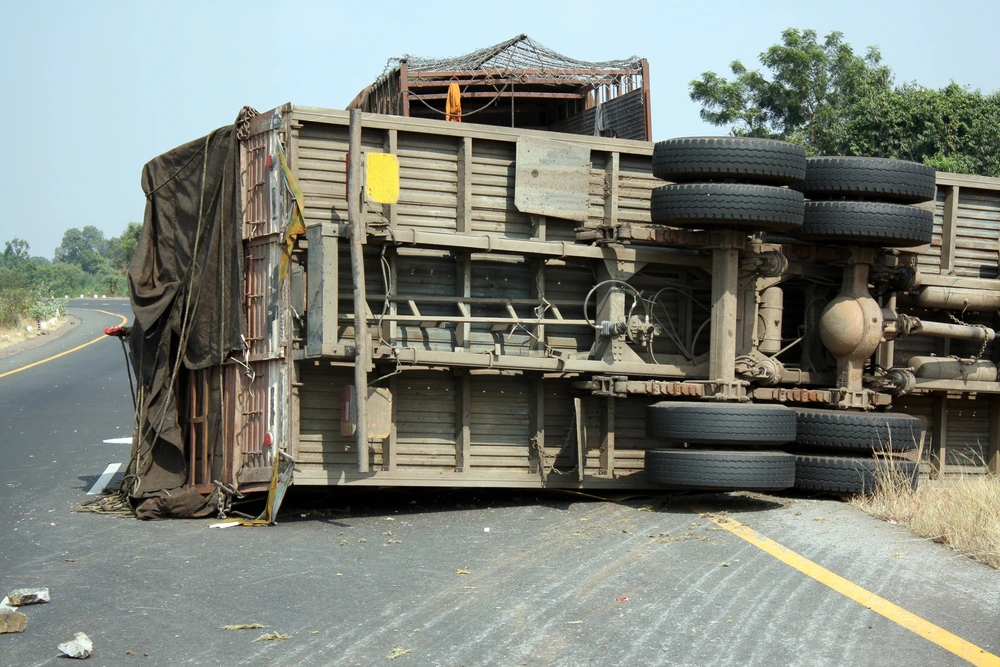
When it comes to commercial vehicle accidents, you don’t need to consult a truck accident lawyer to know that Texas has some of the most dangerous roads in the country. While Texas has about 7.5% of the nation’s total roadway mileage, in the past few years, it has had more than 25% of its truck accidents. In 2022, that meant 38,621 crashes involving commercial motor vehicles. Trucking accidents are also frequently more severe than those involving cars, often resulting in catastrophic injuries, fatalities, and extensive property damage due to the larger size and weight of trucks.
What Happens When a Trucking Company Refuses to Accept Liability?
If a trucking company refuses to accept responsibility for a crash, the impact on its victims can be significant. Without cooperation from the trucking company, they may not be able to access the medical treatment they need, recover from injury, and repair or replace damaged property. For the trucking company, there can also be severe consequences. If a court finds that the company acted in bad faith, it may face a range of sanctions.
Liability in Trucking Accidents
A party is liable if it failed to act with reasonable care and that failure caused injury or damage. This means that the driver could be liable if they failed to drive carefully. It could also apply to the trucking company if they failed to keep the vehicle in good order, leading to a mechanical issue that caused the crash.
Relevant Texas Law
Texas follows a modified comparative fault rule, which means that you have to be found to be at 50% fault or less to recover any damages after an accident. If you are found to be partially at fault for what happened, any damages that you are awarded will be reduced by your percentage of fault.
An employer (such as a trucking company) is liable for the acts of its employee (the driver) if they are committed within the scope of their employment. This is because the employee is carrying out the wishes of their employer, and not acting of their own accord. This doctrine, recognized in Texas and elsewhere, is called respondeat superior, a Latin term which means “let the master answer.”
Common Liability Defenses
When a trucking company refuses to accept responsibility, it may try to use a number of defenses.
Independent Contractor Defense
Trucking companies may claim the driver was an independent contractor, and not an employee, which could shield them from liability. However, courts are free to scrutinize this claim by examining the degree of control exercised by the company over the driver. Under Texas law, the distinction hinges on whether the company controlled the “means and methods” of the work. For example, a company may claim that a driver was an independent contractor and not an employee but may still be found liable if the vehicle is owned by the company rather than by the driver.
Driver Deviation
If it can be proved that the driver was not acting within the scope of their employment, the doctrine of respondeat superior does not apply. A company may therefore claim that the driver was acting outside of that scope by being engaged on a personal errand, driving an unauthorized route, or something similar.
Third-Party Fault
The company may deny that it is at fault in the accident, asserting instead that another driver, a manufacturer-related mechanical failure, or a road maintenance agency was the real cause of the accident.
Lack of Evidence
If the company can show that there is not enough evidence to prove that their driver caused the accident, this will be a good defense. This may include denying that there is evidence of any violations of federal trucking safety regulations or disputing eyewitness testimony of what happened.
What To Do
If you have been involved in an accident involving a truck, and the trucking company has refused to accept liability, you will usually have to pursue compensation through litigation in civil court.
Hire a San Antonio Truck Accident Lawyer
The first step is to find a competent attorney with experience in overseeing not just personal injury cases, but specifically trucking accident cases. It is important that you have confidence in the person advocating for you and trust that they know this area of the law like the back of their hand.
File a Civil Lawsuit
The injured party may file a personal injury or wrongful death lawsuit in Texas state court or federal court (if diversity jurisdiction applies). The suit will allege negligence and seek damages for medical bills, lost income, pain and suffering, etc.
Go Through the Discovery Process
Evidence is the foundation of a strong case. During discovery, we should be able to obtain all sorts of documentation that can help us to prove that the trucking company is liable for the damages you suffered. This might include:
- Driver logs and Electronic Logging Device (ELD) data, which are required by law to track hours of service and prevent driver fatigue
- Dashcam footage
- Maintenance and inspection records
- Employment and training files
- Accident reports and witness statements
Acquire Expert Testimony
In a trucking accident case, it may be helpful to call in various professionals who deal with this kind of incident on a daily basis. This could include accident reconstruction experts, medical professionals, and industry compliance experts who can then be called to establish liability and damages.
Accept a Settlement or Go to Trial
Most cases settle out of court, which is much quicker than having to go to trial. However, if the trucking company continues to deny liability or if their settlement offer is unacceptable, the case may go to trial. At that time, a jury or judge will determine fault and award damages accordingly.
Implications for Trucking Companies
Refusing to accept liability can backfire. If a trucking company has refused to accept liability, and we have taken them to court, they may face serious sanctions if their refusal is judged to be unreasonable or made in bad faith. Along with paying your monetary and non-monetary damages, the company may face punitive damages, which are imposed to discourage it from doing the same thing again. The company’s insurance premiums may also rise, as they are likely to have to pay more if found culpable than they would have if they had settled with you outside of court.
The trucking company may face federal penalties if it violates the Federal Motor Carrier Safety Administration’s rules. Similarly, persistent denials without basis can trigger scrutiny by the U.S. Department of Transportation, which might result in further audits or sanctions. Additionally, the company may suffer reputational damage, leading to a loss of revenue. We can use the threat of these enhanced penalties, along with evidence of the crash, to encourage the company to settle out of court.
Don’t Delay
If you have been involved in an accident involving a commercial motor vehicle, the best time to act is now. The law aims to ensure that those injured by negligent trucking operations are not left without recourse, even in the face of corporate denial.
If you are looking for a skilled advocate, then look no further. Our firm is dedicated to achieving the best possible outcome for our clients, regardless of the circumstances of the case. For a free consultation, contact us at the Gamez Law Firm in San Antonio, TX.
