

Home & Hospital Visits Available | Call 24 hours a day
(1-866-426-3952)
FIGHTS!

How Can Dashcam Footage Help Prove Fault in Your Accident?
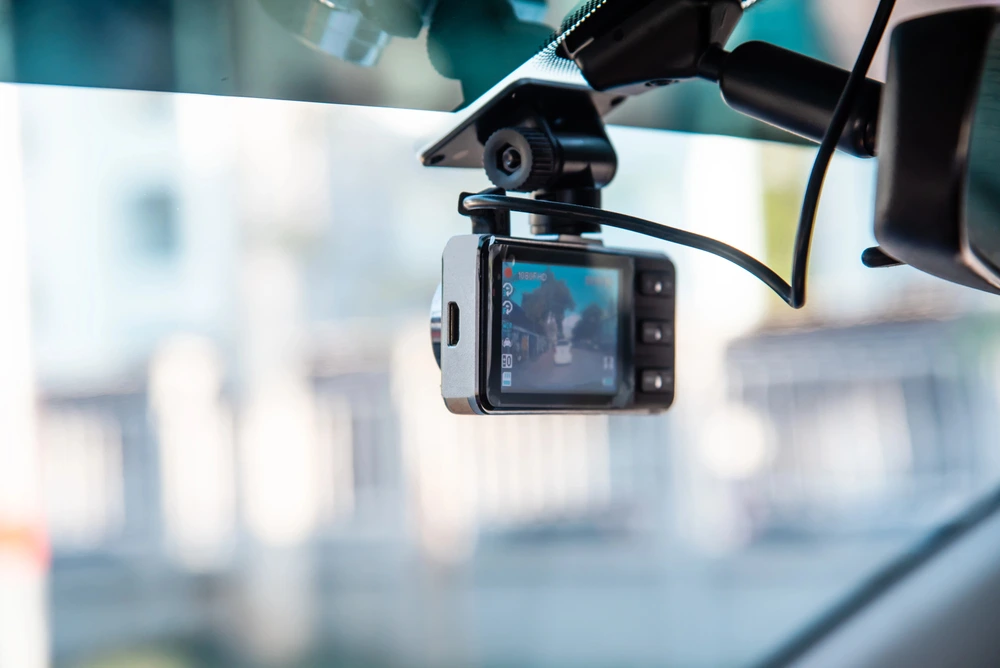
The rise of technology has led to many steps forward when it comes to car accidents, both in the realm of vehicle safety and, in the case of the dashcam, a way to show what really happened in a crash. But how does that footage help you? Hear more from a car accident lawyer in San Antonio.
How Can Dashcam Footage Help Prove Fault in Your Accident?
A dashcam, or dashboard camera, can record video from the front, rear, or interior of a vehicle. While Texas law does not have specific statutes relating to dashcam use in accident claims, courts generally allow video evidence if it is relevant and properly authenticated. Typically, the owner of the dashcam testifies about how the device works, that it was functioning correctly, and that the footage has not been altered.
A Direct Visual Record
The most straightforward way dashcam footage helps is by offering a visual record of what happened. For example, if a driver runs a red light in Houston and strikes your car as you are lawfully proceeding through the intersection, the video may clearly show the light sequence and the positions of the vehicles. Instead of relying on competing statements, investigators and insurance adjusters can refer to the recording.
A Timeline of Events
Accidents often happen in seconds, but small details matter. A dashcam can capture whether a vehicle drifted into another lane gradually or swerved suddenly, whether brake lights were activated, or how long traffic was stopped before impact. These details assist experts in reconstructing the sequence of events with greater precision than even the best human memory allows.
A Support or Contradiction to Testimony
Witnesses are not usually very good at recalling what happened in an accident, even when they are trying hard to be accurate. This means that testimony may have contradictions. Dashcam footage can be used to provide an objective view, either supporting a driver’s account or revealing inaccuracies. Some dashcams record additional data such as GPS location or speed, which can add more relevant information to a case.
Why Does it Matter?
In Texas, accurately establishing fault after an accident matters because you can only recover damages if you are less than 51% responsible for the crash. Even then, if you are deemed to be partially at fault, your recovery will be reduced by your percentage of fault. Evidence plays a central role in determining that percentage, and dashcam footage has become increasingly significant in this process.
Examples of Dashcam Use in Texas Accidents
Rear-End Collision
Imagine Driver A is stopped at a red light when Driver B collides with the rear of Driver A’s car. Normally, rear-end collisions are presumed to be the fault of the trailing driver. However, Driver B argues that Driver A stopped suddenly after accelerating into the intersection. When examined, dashcam footage from Driver A’s car shows that the light had just turned red and that they stopped smoothly and within the normal distance. This recording adds strength to Driver A’s testimony, undercuts Driver B’s defense, and supports the general presumption of rear driver fault.
Lane Change Crash
Two vehicles collide when one attempts a lane change on an expressway. Both drivers accuse the other of drifting. Dashcam footage from one car shows the driver signaling and gradually moving into the adjacent lane while the other vehicle accelerated aggressively from behind. The video evidence in this case suggests shared fault of perhaps 70% for the speeding driver and 30% for the one changing lanes without enough clearance. This division of responsibility would reduce but not eliminate recovery for the signaling driver.
Disputed Hit-and-Run
Driver C is sideswiped and reports that the other driver fled the scene. Their insurer questions whether another car was involved. Dashcam footage confirms the impact from a passing vehicle and even captures part of the license plate. Without that footage, the claim might have been denied by the insurer due to a lack of proof.
Dashcam Video Limitations
Dashcam video is a great addition to the evidence in your case, but it still has its limitations. The evidence gathered is limited by the field of view of the camera, meaning that a front-facing dashcam might not capture a vehicle approaching from the side. The video evidence is only as good as the quality of the video, and poor lighting, glare, or low resolution may obscure details.
Additionally, dashcam footage cannot give context. While video can show what happened, it is not always able to capture why. For example, a dashcam may show that one car caused a crash, but it takes medical testimony to prove that this was the result of the driver suffering an unforeseen medical emergency. Due to these and other limitations, dashcam recordings are rarely the sole piece of evidence used to determine fault.
Other Evidence Considered in Texas Accident Claims
Investigators, insurers, and courts weigh multiple sources when assessing liability.
Police Reports
After a collision, responding officers usually file a Texas Peace Officer’s Crash Report. This report includes observations, statements from drivers and witnesses, and sometimes the officer’s assessment of contributing factors like speeding or failure to yield. While not definitive proof, these reports carry weight because they are prepared by law enforcement personnel, who are considered to be both skilled and neutral.
Witness Testimony
Neutral bystanders can provide perspectives that cannot be captured by a dashcam. For instance, a pedestrian who witnessed a crash might testify that a driver was on their phone moments before impact. Such testimony can support or contradict video evidence. However, human perception and memory are imperfect, so courts often prefer corroboration.
Physical Evidence
The condition of the vehicles and the crash scene also matter in assigning fault. Skid marks, point of impact, and vehicle damage patterns can be analyzed by accident reconstruction experts in order to determine the events surrounding the accident.
Photographs
Photos taken immediately after the accident can capture the positions of vehicles before they are moved, weather conditions, or visibility factors. A photo showing an obscured stop sign or malfunctioning traffic lights might explain why a collision occurred.
Medical Records
In cases where driver impairment or injury severity is disputed, medical documentation helps establish timelines and causation. For instance, records may confirm whether a driver was physically capable of reacting to road conditions, whether they suffered a medical event, or shed light on other factors that contributed to the crash.
Electronic Data Recorders
Many modern vehicles contain “black box” modules that store speed, braking, and steering data from seconds before a crash. This information can be used alongside dashcam footage to give a fuller picture of events.
Contact a San Antonio Car Accident Lawyer
If you’ve been in an accident, your first step should be to call in an experienced lawyer. We know how to make sure that any and all evidence is taken into account, and fault is assigned accurately. Our aim is always to get the best possible resolution to your case.
Dashcam footage is used alongside other types of evidence to determine fault in a crash, but it doesn’t make an open and shut case by itself. Whatever the circumstances that led to your being involved in a car accident, get in touch with us at the Gamez Law Firm in San Antonio, TX.
