

Home & Hospital Visits Available | Call 24 hours a day
(1-866-426-3952)
FIGHTS!

San Antonio Rideshare Accident Lawyer

In the lively city of San Antonio, ridesharing services like Uber and Lyft have become a popular and convenient way to get around. However, as more rideshare vehicles fill the streets, the chances of accidents have increased. A ridesharing accident can be complicated, often involving multiple people and various insurance policies. For instance, if you’re in an Uber accident caused by a distracted driver, figuring out who is responsible and getting compensation can be challenging.
At Gamez Law Firm, we know how tough it can be for accident victims. Our dedicated San Antonio rideshare accident lawyers are here to make the process easier for you. We offer free consultations to discuss your rideshare accident case, providing advice tailored to your situation. Don’t let the complexities of a rideshare accident overwhelm you. Call us today at 210-736-4040 to schedule your consultation and take the first step toward justice and financial recovery.
How Gamez Law Firm Can Help You
At Gamez Law Firm, we are dedicated to helping those affected by rideshare accidents in San Antonio. We focus on giving accident victims the attention they need, taking the time to understand each case fully. Our caring legal team is here to help you navigate your personal injury claim, working hard to get you the compensation you deserve.
We have a strong history of success with rideshare accident cases. By using our experience and knowledge of Texas law, we can effectively deal with insurance companies and represent you in court if needed. Our team understands the challenges of figuring out who is responsible and how rideshare insurance works, as well as creating a legal plan that fits your situation.
Understanding Ridesharing Accidents in San Antonio
Ridesharing service accidents in San Antonio are becoming more common and can lead to serious injuries and significant property damage. These accidents range from minor fender benders to severe collisions, often leaving accident victims dealing with medical bills and car repairs.
Several factors contribute to rideshare accidents. Distracted driving is a major issue, especially since rideshare drivers often use navigation apps. Speeding is another common problem as drivers rush to pick up their next passenger. Additionally, failing to yield to pedestrians can cause serious injuries, particularly at busy intersections.
San Antonio’s unique traffic conditions make these problems worse. Heavy traffic, complicated roads, and frequent intersection accidents all add to the number of rideshare accidents in the city. Knowing these contributing factors highlights the importance of having a skilled rideshare accident lawyer to handle the details of your rideshare accident case involving San Antonio Uber Lyft.
Determining Liability in Rideshare Accidents
Determining liability in rideshare accidents can be tricky and requires understanding several factors. Generally, either the rideshare driver or the rideshare company might be responsible, depending on what happened during the accident. A key aspect in figuring out who is liable is knowing the driver’s status at the time of the accident, as this affects which insurance coverage applies.
Often, rideshare drivers and Lyft drivers are seen as independent contractors, not employees, which can make liability issues more complicated. Companies like Uber and Lyft usually limit their liability unless there’s proof of negligence in how they screen drivers or how their app works. The company’s commercial insurance policy covers the driver from the moment they accept a ride request until the ride is finished.
Proving negligence is essential in determining who is liable. Traffic violations like speeding or distracted driving suggest negligence. Evidence such as police reports, witness statements, and other documents are critical in showing what caused the accident. Additionally, if the rideshare company didn’t provide proper driver training or maintain vehicles, they might be held responsible.
Understanding these details is critical to helping accident victims get the compensation they deserve. Our law firm has the experience to manage these complexities and build a strong case to protect accident victims.
Navigating Rideshare Insurance Coverage
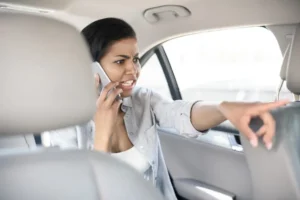 Understanding rideshare insurance coverage can be confusing for accident victims. The insurance coverage you receive depends on the rideshare driver’s status at the time of the accident. Knowing these details is key to ensuring you get the compensation you deserve.
Here’s a simple breakdown of the different statuses and their related insurance coverage:
- Offline Status: When the driver is not logged into the rideshare app, their personal auto insurance applies.
- Available Status: When the driver is logged into the app but has not yet accepted a ride, limited coverage from the rideshare company may apply.
- En Route Status: Once a driver accepts a ride request and is on their way to pick up the passenger, the rideshare company provides increased insurance coverage.
- On-Trip Status: While the driver is transporting the passenger, the company offers the highest level of coverage, often up to $1 million for injuries and property damage.
For instance, when an Uber driver is on a trip, the company provides at least $1 million in insurance coverage for injuries and property damage. Similarly, Lyft offers up to $1,000,000 per accident.
If you’re involved in an accident, you can file a claim with the rideshare company’s insurance provider. It’s crucial to remember that Uber drivers must also have personal auto insurance to meet Texas state requirements. Understanding how these insurance policies work can significantly affect the outcome of your claim.
Steps to Take After a Ridesharing Accident
Knowing what to do right after a rideshare accident can greatly impact the success of your personal injury claim. Follow these simple steps to make sure your rights are protected and your case is strong:
- Check for Injuries: Assess yourself and others for any injuries. Prioritize safety and call emergency services if needed.
- Contact the Police: Promptly report the accident to the police to create an official report. This documentation is critical for your case.
- Document the Scene: Take photographs of the accident site, vehicle damage, and any visible injuries. Capture multiple angles to provide a clear view of the situation.
- Exchange Information: Collect detailed information from all involved drivers, including their names, contact details, and insurance information. Note the rideshare driver’s status at the time of the accident.
- Gather Witnesses: Obtain contact information from any witnesses. Their accounts can be invaluable in supporting your claims.
- Seek Medical Attention: Even if you feel fine, seek immediate medical attention. Document any injuries, including potential traumatic brain injuries, as this will be crucial for future claims.
- Notify the Rideshare Company: Report the accident to the rideshare company through their app to initiate the claims process.
- Consult a Lawyer: Contact an experienced rideshare accident lawyer to guide you through the legal complexities and represent your interests effectively.
By following these steps, you can protect your rights and build a strong rideshare accident case. Our law firm is here to support you at every stage, ensuring you have the necessary representation to seek the highest possible compensation.
Maximizing Compensation for Rideshare Accident Victims
Getting fair compensation is a vital part of recovering after a rideshare accident. At Gamez Law Firm, we are dedicated to helping accident victims in San Antonio get the most financial compensation possible for their injuries and losses. Our rideshare accident lawyers know how complicated rideshare accident claims can be and work hard to ensure you get all the damages you’re entitled to.
Compensation can cover many costs, including medical bills, lost wages, and pain and suffering. We carefully collect evidence, negotiate with insurance companies, and represent you in court if needed to build a strong case for your financial recovery. By focusing on your specific situation, we aim to ease the financial stress of your accident, so you can focus on healing and getting better.
Common Challenges in Rideshare Accident Cases
Rideshare accident cases in San Antonio can be tricky due to several unique challenges. First, figuring out who is responsible can be tough because rideshare drivers are considered independent contractors, not employees. This makes it harder to hold rideshare companies accountable unless you can prove they were negligent in some way.
Another hurdle is understanding the various insurance policies involved. Depending on whether the driver was offline, available, en route, or on a trip, different insurance coverages apply. Knowing which policy is relevant is crucial for accident victims trying to get compensation.
Collecting evidence can also be difficult. Rideshare accidents often involve multiple people, making it challenging to gather accurate witness statements, police reports, and other necessary documents in the chaos following an accident.
Dealing with insurance companies adds another layer of difficulty. They might try to reduce payouts or deny claims altogether, so having experienced legal help is important to negotiate on your behalf.
By being aware of these challenges, accident victims can better prepare for the legal process. Our caring San Antonio rideshare accident lawyer at Gamez Law Firm is ready to assist you in overcoming these obstacles and working towards getting you the compensation you deserve.
Contact Our Rideshare Accident Lawyers at Gamez Law Firm
We value clear communication and honesty, offering free consultations to talk about your case and explore your options. We aim to make the legal process less stressful for you, so you can focus on getting better while we handle the details.
Don’t let the aftermath of an accident overwhelm you. Contact Gamez Law Firm today and start your journey toward justice and financial recovery. Call us now at 210-736-4040 to schedule your consultation.
