

Home & Hospital Visits Available | Call 24 hours a day
(1-866-426-3952)
FIGHTS!

How Do You Establish Fault in Accidents Involving Pedestrians?
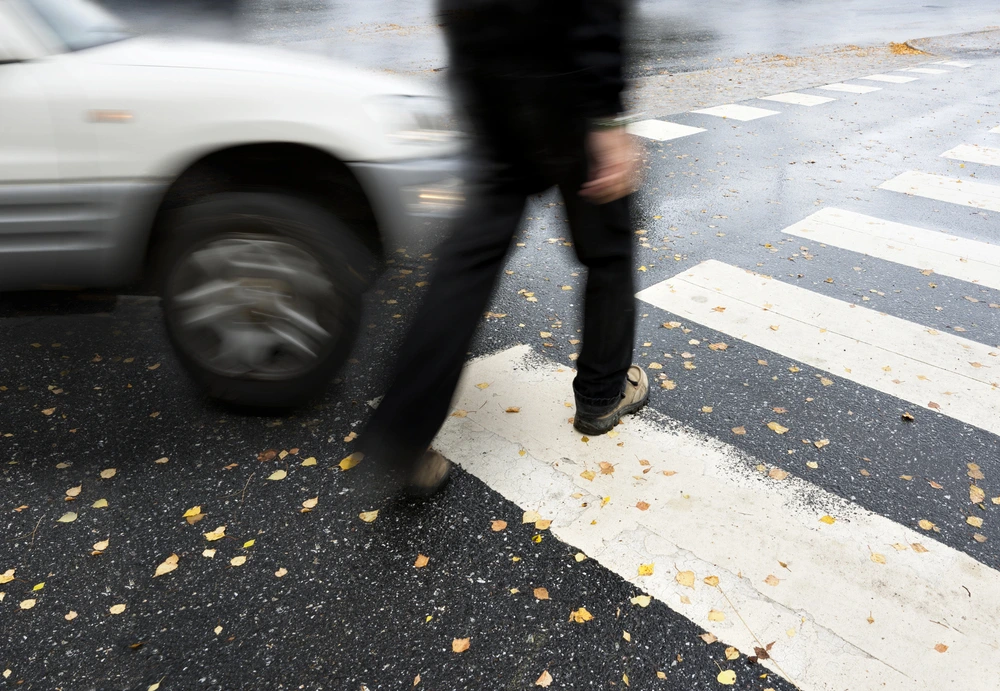
Pedestrian accidents are truly devastating. When you have a big city like many of those here in Texas, the risk of an interaction between vehicle and foot traffic is essentially inevitable, but when it does happen, it can forever change the life of a pedestrian victim. Determining fault is one of the most importance steps in getting justice and proper compensation. A personal injury lawyer in San Antonio can help you get the evidence you need and use it well to build a compelling case.
How to Establish Fault in Pedestrian Accidents: Insight From a San Antonio Personal Injury Lawyer
Texas Fault System
The first thing to understand is how Texas determines fault in these cases. We have a comparative negligence system, which means that responsibility can be shared by both the pedestrian and the driver and even by a third party at times. For example, if an accident between a car and pedestrian is caused by the car swerving suddenly to avoid a large obstacle that has fallen off a poorly loaded truck, even if the truck was not actually immediately involved in the accident, the driver or possibly a trucking company could also be responsible.
Under the comparative negligence system, damages are reduced based on the percentage of fault that is assigned to each party. Anyone assigned more than 50% of the fault is barred from recovering compensation. Everyone else will typically see their compensation reduced by the same percentage as their fault.
Dynamics of Pedestrian Accidents
Everyone who uses a public road has a duty of care towards all other road users. Drivers owe a duty of care to pedestrians to give them right of way under the correct circumstances, such as at crosswalks or in school zones, as well as to obey all traffic laws and drive sensible for the road conditions. But pedestrians have a duty of care, as well. Pedestrians are required to follow traffic signals, yield to vehicles when the law requires them to do so, and to exercise basic and reasonable caution. Whenever someone breaches the duty of care, whether that’s a driver who speeds or a pedestrian who jaywalks, this becomes an important direction to investigate for establishing fault.
Proving Fault
To prove fault, you will need evidence. In cases like this, typically important evidence includes the police report, video footage from traffic cameras or dashcams, eyewitness testimony, medical records, and possibly also photos from the accident scene. If the driver and pedestrian disagree as to how the accident happened, all this evidence becomes even more important.
Sometimes the disagreement is in bad faith: i.e., the guilty person in the situation is just trying to avoid responsibility by blaming the other party. But sometimes accidents happen so fast that everyone involved may genuinely have a totally different understanding of what just took place. That’s where your car accident attorney will be such an important asset to you. Your attorney can go through all the evidence carefully, call in an accident reconstruction specialist if necessary, and help everyone involved to understand what actually happened and who was at fault.
Negligence in Determining Fault
Establishing fault after an accident requires proving negligence. Negligence occurs when a party fails to exercise the level of care that a reasonable person would under similar circumstances, and this failure causes someone else harm. Proving or disproving negligence requires breaking the concept into four key elements, each of which must be separately proved: duty, breach, causation, and damages.
Duty
Drivers in Texas have an obligation to operate their vehicles safely whenever they choose to take those vehicles onto the road. This means never driving impaired or distracted and obeying all rules of the road. There are extra duties for a driver in places where pedestrians typically appear, as part of the acknowledgment that vehicles have the potential to cause enormous damage to an unprotected person. Texas Transportation Code Section 545.302, for example, prohibits parking or stopping on a crosswalk: a driver has a responsibility to keep these areas clear.
Pedestrians, meanwhile, have a reciprocal duty to follow traffic laws and avoid unnecessarily endangering themselves or others.
Breach
Breach of duty is where fault begins to take shape. A driver can breach their duty by speeding, running a red light, driving drunk, or failing to yield to a pedestrian in a crosswalk. A pedestrian might breach their duty by crossing against a signal, darting out into traffic, or deliberately obstructing the roadway. Proving there’s been a breach, and whose breach it was, can be done by evaluating evidence like photos of skid marks, dashcam footage, or cell phone records.
Causation
Causation ties the breach of duty directly to the accident. The injured party must show that the breach was the proximate cause of their injuries. The idea here is to show that the harm you have suffered would not have occurred “but for” the other party’s negligence. Causation can be tricky to prove, and here is where it’s possible for more than one party to be at fault.
For example, if a driver is texting and did not see a pedestrian who was legally crossing the street, the liability is very clear. The driver is 100% responsible. However, even if the driver was texting, if the pedestrian suddenly darts out into traffic in the middle of a block, leaving a driver no time to react even if they had not been on their phone, then it’s likely liability will be shared.
Damages
The final step in proving fault is proving exactly what damages resulted from the accident. It’s not enough that an accident has happened or even that someone was negligent: it must be possible to show precisely what the victim has lost so that they can be properly compensated.
In these cases, compensation can be for both economic and non-economic damages. Economic damages are monetary losses that can be calculated using bills and receipts. This would include all medical bills, lost salary or wages from time missed at work due to the injury, and other expenses, such as taxis to medical appointments. Non-economic damages are commonly known by terms like “pain and suffering.” These are typically calculated with reference to the total economic damages. Your lawyer will first help you to calculate all your economic damages, and, once that is done, you will multiply these by a number between one and five. The greater your injuries and losses, and the more time they take to recover from, the higher that number will be.
In some very rare cases, the courts may even award punitive damages to a victim, but these are not common. Punitive damages do not reimburse the victim for any losses. They only punish the liable party and are designed as a deterrent, to warn others against acting with that kind of negligence. These damages are only awarded in cases where the negligent party acted with “gross negligence” (a complete, reckless disregard for the safety of others) or even deliberately. Your lawyer can tell you more about whether it’s possible that punitive damages might imply in your case.
For a free case evaluation on your pedestrian accident, contact the Gamez Law Firm today in San Antonio, Houston, Austin, McAllen, Dallas, or Laredo.
