

Home & Hospital Visits Available | Call 24 hours a day
(1-866-426-3952)
FIGHTS!

Can You Sue a Manufacturer for Defective Car Parts After an Accident?
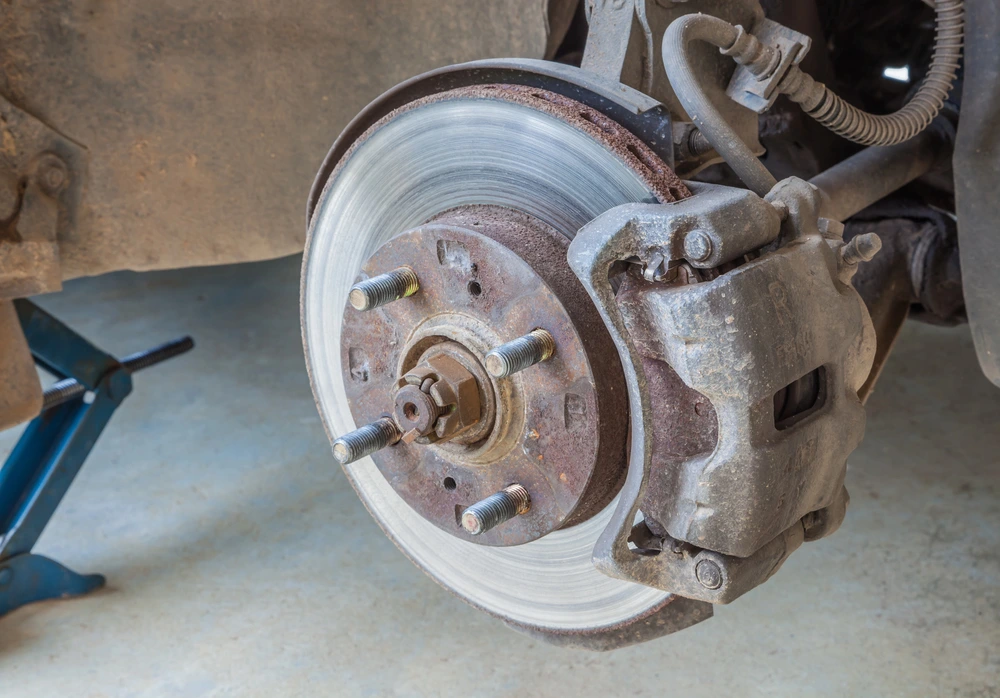
After a car accident, the first person you look to for claiming damages is often the driver of the other vehicle. But what happens if that driver didn’t do anything wrong? What happens if the accident was actually caused by a defective car part, either in your vehicle or in someone else’s? A car accident attorney in San Antonio can help you sue a manufacturer if a defective car part has caused an accident.
Suing for a Defective Car Part
Texas product liability laws, under the Texas Civil Practice and Remedies Code, Chapter 82, permit you to bring a lawsuit based on strict liability, negligence, or a breach of warranty. Let’s explore in depth what all this means and how it affects your car accident case.
Qualifying as “Defective”
The first question is whether you can prove that the part was genuinely defective. The law defines a defective part as one that fails to perform its intended function or that poses an unreasonable risk due to a flaw. There are several ways that this can happen. The first may be due to a manufacturing defect. A part that has a manufacturing defect was designed well, but not produced properly. This could be because the manufacturer’s specifications were not followed during production, or because improper materials were used during that production.
A design defect is a bit different. A design defect occurs when the part’s actual design is unsafe, meaning it would pose problems even if it were manufactured perfectly. It’s important to determine which type of defect you’re dealing with because that will affect your legal strategy. If it’s a manufacturing defect, it’s likely just a specific batch of vehicle parts that your lawyer will be investigating. If it’s a design defect, an entire model line could be affected, and the case may be larger because there may be legitimate questions about how such a defect could’ve been allowed in the first place.
Deciding the Lawsuit Basis
As mentioned above, Texas allows you three different areas in which to bring a product liability suit. The first is the strict liability doctrine. According to this rule, a manufacturer is liable if a product is defective at the time it leaves their control. You do not have to prove that the manufacturer was actually negligent. It is enough that they allowed a defective part to be released to the public.
The second thing you can argue is actual negligence. You can sue if the manufacturer did not exercise reasonable care in the design or manufacturing of a part. To do this, you would likely need to show that there were known risks that the manufacturer ignored. Finally, you can also sue for breach of warranty. This can be either a written express warranty or an implied warranty.
For example, a brake pad has an implied warranty that it will actually work as expected to bring a car to a stop. If the brake pad works but wears out much too early, this would constitute a violation of the written or express warranty. But if the brake pads never worked properly in the first place, this would constitute a breach of an implied warranty.
Is a Seller Involved?
It also matters who sold you the product. Under Texas law, a seller only has very limited liability if they did not actually manufacture the part. The only way they could be held liable is if they designed the product, altered it after it was brought to them, installed it, or made incorrect representations about it. This last really only applies if you can show that they knew there was a defect and did nothing about it. In some cases, if the manufacturer of a part is insolvent or is not subject to the jurisdiction of Texas, you may be able to bring an action against the seller. Talk to a lawyer to find out more.
Who Can Be Sued
In most cases, the first target of a lawsuit will be either the car manufacturer or the manufacturer of the specific part that failed. This is often the same entity, but if a driver had work done and an aftermarket part installed, it could be a separate manufacturer. You may also be bringing an action against the distributor or seller, but they do have less exposure, so you will need to be quite sure that this is really something that can be laid at their feet. A lot will depend on the precise chain of distribution for the part involved.
Steps for Suing a Car Manufacturer for Defective Parts
Consult with an Attorney
Your first step should be to speak with an attorney with experience in car accidents and product liability. An attorney can give you an idea of whether you have a strong case, help you identify precisely who the responsible party is, and then conduct a thorough investigation of the accident to find out what part the defective part played. In many of these cases, accident reconstruction specialists are needed, and your attorney will have a network of specialists to call upon. Your attorney will help you gather all the important evidence and then build a strategy about whom to sue and precisely what to claim.
File the Lawsuit
Your next step is to file the lawsuit, which must be done in most cases within 2 years of the injury. Then you and the other side will begin exchanging information and likely begin settlement negotiations. If you can negotiate effectively with the manufacturer or distributor, you may be able to resolve the case without going to trial. This is usually faster and cheaper, and while settlements can be larger in a trial, trials also involve greater uncertainty. It’s just difficult to tell what a judge or jury might decide, even when presented with clear evidence. Your lawyer will have familiarity with the local courts and will thus be able to give you a good idea of whether any settlement is a good idea and whether you should go all the way to court.
Trial
If you are not able to come to a settlement agreement, the case will go to trial, and a judge or jury will make the final decision. Your lawyer will, of course, take the lead in the courtroom and will need to provide proof of the defect. This can be done through expert testimony from a professional who analyzes the part itself. If the issue is not a manufacturing defect but a design defect, you’ll also need to show that safer design alternatives could’ve been used.
Your lawyer will also have to show that it was specifically the defective part that caused the accident and that this accident is specifically what caused your injuries.
Bringing a defective part case is not easy and should never be attempted on your own. Contact the Joe A. Gamez Law Firm, PLC as soon as possible for a free consultation on your case.
Contact Our San Antonio Car Accident Lawyers at Gamez Law Firm
We serve all areas in San Antonio and throughout Texas.
Gamez Law Firm
2943 Mossrock, San Antonio, TX 78230
Open 24 hours
Find us with our GeoCoordinates: 29.51192751788769, -98.53749172596612
