

Home & Hospital Visits Available | Call 24 hours a day
(1-866-426-3952)
FIGHTS!

What Is the Maximum Weight Limit of an 18-Wheeler?
When you see massive 18-wheelers hauling freight down Texas highways, it is hard not to wonder just how heavy those trucks really are. These large commercial vehicles form the backbone of the U.S. transportation system, moving millions of tons of goods every year. But there are strict rules regulating how much weight these trucks can legally carry. These limits are designed to protect drivers, infrastructure, and everyone on the road.
At Gamez Law Firm, we’ve handled countless cases involving truck accidents caused by overloaded or improperly maintained vehicles. Understanding the semi truck weight limits and how overloading can lead to devastating crashes is essential for public safety.
If you or a loved one has been injured in a collision with an 18-wheeler, call our San Antonio truck accident lawyers at (210) 736-4040 for a free consultation.
The Legal Weight Limit for 18 Wheeler Trucks
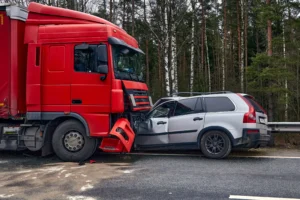 Federal law, through the U.S. Department of Transportation (DOT) and Federal Highway Administration (FHWA), sets the maximum weight capacity for commercial trucks traveling on interstate highways. Under the Federal Bridge Formula, the maximum legal weight of a tractor-trailer truck is 80,000 pounds, or 40 tons, including the tractor, trailer, cargo, and fuel.
This total includes:
- Steer axle: up to 12,000 pounds;
- Drive axles (on the tractor): up to 34,000 pounds;
- Trailer axles: up to 34,000 pounds.
These limits ensure that 18-wheeler trucks do not place excessive strain on bridges and roadways. Overloaded trucks can cause serious wear and tear to public infrastructure and create life-threatening hazards for other motorists.
How Much Do Semis Weigh Empty vs. Loaded?
When discussing how much semis weigh, it’s important to distinguish between “tare weight” (empty) and “gross weight” (fully loaded).
- Empty (Tare) Weight: The semi weight, meaning just the tractor and trailer without cargo, generally ranges from 30,000 to 35,000 pounds.
- Gross (Loaded) Weight: The maximum legal gross weight, as noted, is 80,000 pounds.
However, some 18-wheeler trailers are built to handle even more weight, particularly those operating under special permits or hauling “oversize/overweight” loads. In those cases, the trucking company must apply for additional authorization and may only travel on designated routes that can support such heavy loads.
Why Weight Limits Are So Important
An overloaded 18-wheeler poses significant safety risks. The heavier a truck is, the longer it takes to stop, and the more stress it places on tires, brakes, and suspension systems. The fully loaded weight of a tractor-trailer truck can already require up to two football fields of stopping distance when traveling at highway speeds. Add even a few thousand pounds beyond the legal weight capacity, and that stopping distance increases dramatically.
Excessive weight can also cause tire blowouts, brake failures, and jackknife accidents, all of which are common causes of catastrophic collisions. When trucking companies or drivers disregard these limits, they not only break the law but also endanger everyone on the road.
The Height and Dimensions of an 18-Wheeler
While weight is critical, the height and size of a tractor-trailer truck also play a major role in safe operation. Most 18-wheelers in the United States measure about 13.5 to 14 feet tall, 8.5 feet wide, and 70 to 80 feet long, depending on the configuration.
These large dimensions make 18-wheeler trucks difficult to maneuver and limit visibility. When combined with heavy loads, they become even harder to control in sudden stops or turns. This is why truck drivers must receive specialized training and maintain strict compliance with state and federal regulations regarding load weight and vehicle maintenance.
What’s the Biggest Known Weight Towed on a Semi?
Curious about what’s the biggest known weight towed on a semi? While most trucks stick to the 80,000-pound legal limit, record-breaking hauls have reached astonishing levels. For example, specialized heavy-haul semis have transported loads exceeding 900,000 pounds, using multiple tractors and trailers connected in tandem.
These extraordinary moves require state-by-state permits, police escorts, and carefully engineered routes to prevent damage to roads and bridges. Though impressive, such operations are rare and heavily regulated, a far cry from what standard 18-wheelers are designed to carry.
Overloaded Trucks and Liability
When a trucking company exceeds the legal weight capacity or fails to balance a load properly, it can be held liable for any resulting accidents. Uneven or excessive cargo can shift during transit, causing a semi truck weight imbalance that leads to rollovers, tire failures, or rear-end crashes.
At Gamez Law Firm, we investigate truck accident cases thoroughly, reviewing maintenance logs, weigh station data, and driver records to determine whether overloading or negligent loading contributed to a collision. Our team understands that even a few thousand extra pounds can transform a heavy vehicle into a deadly hazard.
Safety Measures for Weight Compliance
To ensure compliance, most 18-wheeler trucks must pass through weigh stations strategically placed along highways. These checkpoints verify that the truck’s weight is within legal limits and that the load is distributed correctly.
Newer technologies, such as onboard scales and telematics, allow trucking companies to monitor weight capacity in real-time. However, when these systems are ignored or bypassed, the risk of mechanical failure and collisions rises sharply.
Drivers are also required to conduct pre-trip inspections to ensure tires, brakes, and suspension systems can safely handle the current load. Neglecting these duties not only violates federal safety rules but also exposes the company and driver to liability if an accident occurs.
Hurt in a Semi Crash? Our Truck Accident Lawyers at Gamez Law Firm Can Help
The legal limit that balances productivity and safety on America’s highways. The next time you pass one of these enormous vehicles, remember that an overloaded truck can be as dangerous as a speeding one. Ensuring compliance with the weight capacity isn’t just about protecting freight; it’s about saving lives.
If you were hurt in a truck accident involving an overweight or improperly loaded 18-wheeler trailer, contact Gamez Law Firm for help. Our attorneys fight for injured victims throughout Texas and hold negligent trucking companies accountable for unsafe practices. Call (210) 736-4040 today or contact us online for your free consultation.
We serve all areas in San Antonio and throughout Texas.
Gamez Law Firm
